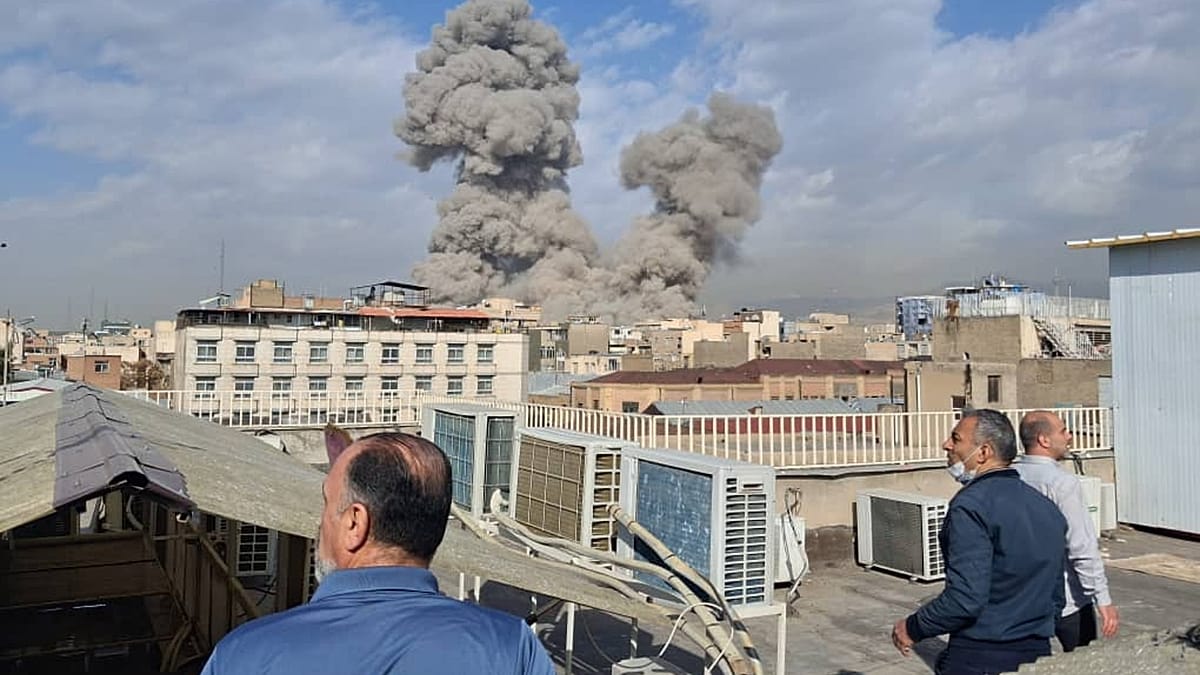
Operation Epic Fury: Europe Warns of Regional War After Iran Attack
The Middle East stands at a perilous precipice following the audacious joint US and Israeli military operation, dubbed "Operation Epic Fury." As the dust settles from intense aerial bombardments targeting Iranian military and governmental sites, a grim reality has emerged: the reported death of Iranian Supreme Leader Ayatollah Ali Khamenei. This stunning development, confirmed by President Donald Trump, has not only sent shockwaves through the region but has also triggered urgent warnings from European leaders that the conflict risks spiraling into a full-blown regional war. The implications of this attaque éu iran are far-reaching, fundamentally altering the geopolitical landscape and threatening global stability.
Trump described the strikes as the "greatest chance" for the Iranian people to "take back" their country, signaling a clear intent beyond mere retaliation. This marked the second time in eight months that the Trump administration has engaged in direct military action against Iran during ongoing nuclear program talks. While Iran had previously retaliated with missile and drone launches towards Israeli and US bases, the scale and outcome of "Operation Epic Fury" represent a significant escalation, pushing the already volatile region to the brink of an unprecedented conflict.
Unprecedented Strikes and a Leadership Vacuum: The Fallout of "Operation Epic Fury"
The joint US and Israeli aerial bombardment, "Operation Epic Fury," was characterized by its "heavy and pinpoint bombing" of critical Iranian military and governmental infrastructure. This deliberate targeting, intended to continue "through the week or as long as necessary," underscores a determined military posture. The most significant, and potentially destabilizing, outcome of this operation is the reported death of Ayatollah Ali Khamenei. Having led Iran for decades, Khamenei's demise creates a monumental leadership vacuum. Given the absence of a clearly designated successor and his absolute authority over all major policies, the void left by his absence could plunge Iran into internal power struggles, potentially leading to further instability both domestically and regionally. This critical event is further explored in our related article: US-Israel Strikes on Iran: Khamenei's Death and Power Vacuum.
The strategic implications of such a leadership change are immense. Without a strong, unified successor, the potential for factionalism within Iran's political and military establishment increases. This internal turmoil could either lead to a more hardline stance from potential successors seeking to consolidate power, or, conversely, create an opportunity for internal shifts that could reshape Iran's future trajectory. The world watches with bated breath, understanding that the aftermath of this attaque éu iran will define the region for years to come.
Europe's Grave Warnings: An "Outbreak of War" Looms
The reverberations of "Operation Epic Fury" have echoed strongly across Europe, eliciting a response characterized by both alarm and urgent caution. European leaders are acutely aware of the potential for a wider conflagration and its dire consequences for international peace and security. A joint statement from the European Commission and the EU Council expressed profound concern, reaffirming the EU's "steadfast commitment to safeguarding regional security and stability."
French President Emmanuel Macron did not mince words, describing the strikes as an "outbreak of war" that carries "serious consequences for international peace and security." He immediately called for an "urgent meeting" of the United Nations Security Council, emphasizing the immediate need for international diplomatic intervention. Similarly, European Commission President Ursula von der Leyen and European Council President Antonio Costa issued a joint statement, highlighting the gravity of the situation and the collective European fear that the conflict could spill over into the broader Middle East. Europe's geographical proximity and economic ties to the Middle East mean that any regional instability, particularly a large-scale conflict, would have immediate and severe impacts on the continent, including potential refugee crises, energy price spikes, and increased security threats.
Diplomatic Battleground: IAEA and UN Security Council in Focus
Amidst the escalating military aggression, the diplomatic arena has become a critical battleground. The International Atomic Energy Agency (IAEA) is at the forefront of these concerns. Following a request from the Russian Federation, the IAEA's Board of Governors convened a special session at its headquarters in Vienna. Russia's diplomatic note specifically highlighted "military strikes of the United States and Israel against the territory of the Islamic Republic of Iran... preceded by repeated open threats of such action, including against nuclear facilities under the IAEA safeguards." This focus on potential threats to nuclear facilities adds another layer of complexity and danger to the conflict, raising fears of catastrophic environmental and humanitarian consequences. For more details on this urgent session, see: Iran Crisis: Russia Requests IAEA Session Amid US-Israel Strikes.
Meanwhile, the UN Security Council witnessed a rare and fiery exchange between the representatives of the United States and Iran. As military aggression escalated, the diplomatic decorum frayed. Following U.S. Ambassador Mike Waltz's response to Iranian claims of international law violations, Iran's diplomat issued a stark warning: "I advise to the representative of the United States to be polite. It will be better for yourself and the country you represent." Waltz's immediate retort underscored the deep-seated animosity, accusing the Iranian regime of tyranny and the oppression of its own people. Israel's U.N. Ambassador Danny Danon further fueled the tension by citing Iranian chants of "Death to Israel, Death to America" as acts of state-sanctioned aggression. These exchanges highlight the profound lack of trust and communication that complicate any efforts towards de-escalation, making the prospects of a regional war even more chillingly real.
The Perilous Path to Regional War: Analysis and Implications
The term "regional war" is not merely rhetorical; it describes a catastrophic scenario with far-reaching consequences. Such a conflict in the Middle East would inevitably draw in numerous regional and international actors, each with their own interests, alliances, and military capabilities. The potential domino effect is terrifying:
- Economic Impact: A major war in the Middle East would severely disrupt global oil supplies, sending prices skyrocketing and triggering a worldwide economic downturn. Trade routes could be compromised, further exacerbating economic instability.
- Humanitarian Crisis: Millions could be displaced, leading to an unprecedented refugee crisis that would strain the resources of neighboring countries and Europe. Civilian casualties would be immense, and critical infrastructure destroyed.
- Escalation of Proxy Conflicts: Existing proxy conflicts across the region (e.g., in Yemen, Syria, Iraq, Lebanon) could intensify dramatically, leading to widespread violence and instability.
- Risk of Nuclear Proliferation: Any attack on safeguarded nuclear facilities, as highlighted by Russia's IAEA request, carries the unthinkable risk of environmental devastation and the spread of radioactive material, not to mention the direct threat to life.
- Global Security: A regional war would divert international attention and resources from other pressing global issues, empower extremist groups, and create new breeding grounds for radicalization.
To mitigate these risks, international diplomacy must be intensified. Practical steps include establishing clear communication channels between all parties, imposing immediate ceasefires, and engaging in multilateral negotiations spearheaded by neutral actors. Europe's call for UN Security Council meetings is a vital first step, but continuous, sustained diplomatic pressure will be required to prevent the region from descending into further chaos. The lessons from previous conflicts in the Middle East underscore the immense challenges of containing military action once it begins. The international community, therefore, bears a heavy responsibility to act decisively and collectively to prevent "Operation Epic Fury" from unleashing a tragedy of truly epic proportions.
The current trajectory following the attaque éu iran, particularly the reported death of Ayatollah Ali Khamenei and the ensuing leadership uncertainty, presents the gravest challenge to Middle Eastern and global security in decades. Europe's urgent warnings of an "outbreak of war" are not mere rhetoric but a stark recognition of the catastrophic potential inherent in the current escalation. With diplomatic avenues strained and military actions intensifying, the world holds its breath, hoping that reason and international cooperation can prevail over the perilous path to a wider regional conflict.