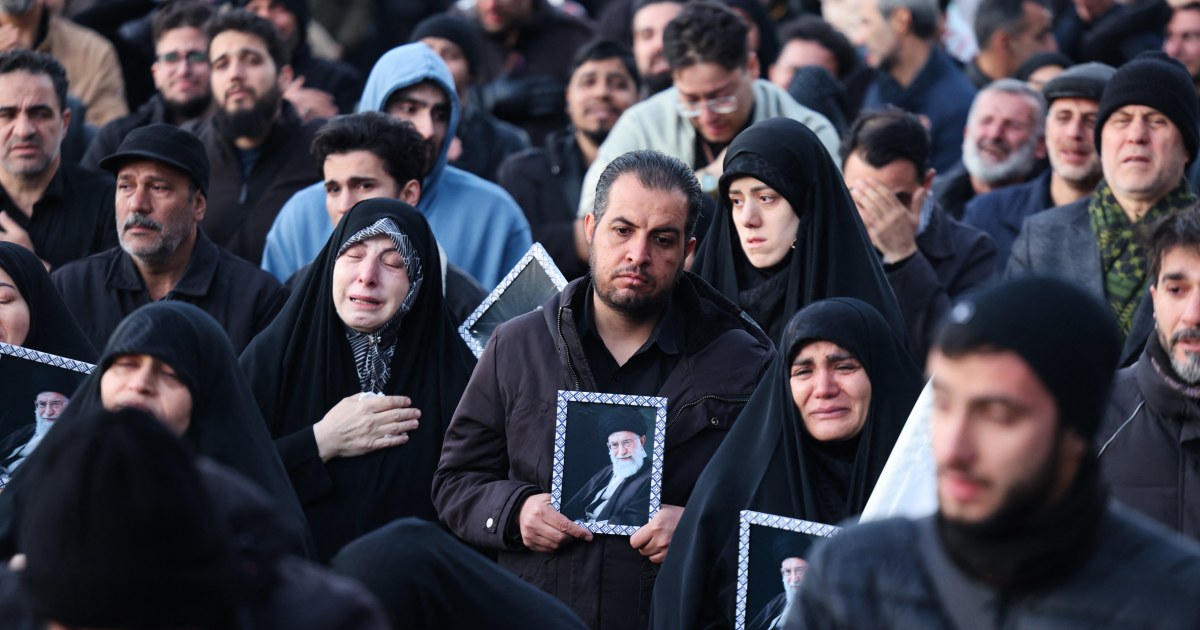
A New Chapter in US-Israel-Iran Relations: The Reported Demise of Khamenei
The recent US-Israel attaque éu iran (attack on Iran) has sent shockwaves across the globe, dramatically escalating tensions in the Middle East and beyond. In a stunning development, President Donald Trump announced the reported death of Iran's Supreme Leader, Ayatollah Ali Khamenei, during a major joint aerial bombardment campaign by the United States and Israel. This unprecedented turn of events, marked by "heavy and pinpoint bombing" aimed at Iranian military and governmental sites, opens a perilous new chapter, potentially reshaping the geopolitical landscape of the region.
The announcement by President Trump, made amidst ongoing strikes, positioned Khamenei's reported demise as the "greatest chance" for the Iranian people to "take back" their country. This declaration underscores a dramatic shift in U.S. foreign policy toward Iran, marking the second time in eight months that the Trump administration has launched direct military action against the nation amidst stalled nuclear program talks. The intensity and declared objectives of these recent strikes signal a profound deepening of the conflict, moving beyond targeted retaliations to an assertive campaign aimed at critical military and governmental infrastructure.
The alleged killing of a figure as central as Ayatollah Ali Khamenei, who has held the ultimate authority in Iran for decades, carries immense implications. As the Supreme Leader, Khamenei had the final say on all major policies, from domestic affairs to foreign relations and the nuclear program. His absence creates an immediate and profound leadership vacuum, an eventuality that observers believe will plunge Iran into a period of intense uncertainty and potential internal struggle, further complicated by the absence of a clearly designated successor.
The Unprecedented Power Vacuum: Implications of Khamenei's Passing
The reported death of Ayatollah Ali Khamenei introduces a formidable leadership crisis within Iran. For over thirty years, Khamenei served as the ultimate arbiter of power, ideology, and policy. His passing leaves a significant void, particularly concerning the lack of a publicly recognized or agreed-upon successor. Traditionally, the Assembly of Experts, a body of 88 clerics, is responsible for electing the Supreme Leader. However, the process is often fraught with political maneuvering and infighting, especially when a strong candidate isn't readily apparent.
Potential Scenarios for Iran's Future:
- Internal Power Struggle: Without Khamenei's unifying (or dominant) presence, various factions within the Iranian establishment – including conservative clerics, the Islamic Revolutionary Guard Corps (IRGC), and reformist elements – could vie for influence. This could lead to a period of instability and potentially violent clashes.
- Rise of a Military Figure: Given the prominence and power of the IRGC, there's a possibility that a high-ranking military figure could emerge as a powerful, even decisive, force in the succession process, potentially challenging the traditional clerical leadership.
- Popular Uprising: President Trump's call for Iranians to "take back" their country suggests an expectation, or hope, for popular unrest. A leadership vacuum, coupled with foreign pressure and potential economic hardship, could indeed embolden segments of the population to challenge the existing regime, though the outcome of such movements is always uncertain and often met with severe repression.
The stability of Iran’s nuclear program, its regional proxy networks, and its overall geopolitical stance will hinge critically on who, and how, the succession unfolds. Any prolonged period of instability could invite further external intervention or embolden regional rivals, dramatically reshaping the balance of power in the Middle East.
Regional Escalation and Global Repercussions: Europe and the IAEA React
The US-Israel strikes and the reported death of Iran's Supreme Leader have triggered alarm bells globally, intensifying fears of a wider regional conflict. Prior to these specific major bombardments, Iran had already retaliated against earlier US and Israeli actions by launching missiles and drones toward Israeli targets and U.S. military bases in the region, illustrating a dangerous tit-for-tat escalation that has now reached a critical juncture.
Europe, in particular, has reacted with a mix of alarm and urgent calls for de-escalation. A joint statement by the European Commission and the EU Council expressed "great concern" over the developments, reaffirming the EU's "steadfast commitment to safeguarding regional security and stability." French President Emmanuel Macron notably described the strikes as an "outbreak of war" that carries "serious consequences for international peace and security," promptly calling for an urgent meeting of the United Nations Security Council. The European leaders' apprehension is clear: these operations, which the Pentagon has reportedly dubbed Operation Epic Fury: Europe Warns of Regional War After Iran Attack, risk spilling over into a catastrophic regional conflagration.
Concurrently, the international community's concerns extend to Iran's nuclear facilities. The Board of Governors of the International Atomic Energy Agency (IAEA) is set to convene a special session in Vienna following a request from the Russian Federation. Russia's diplomatic note explicitly sought the session to address "matters related to military strikes of the United States and Israel against the territory of the Islamic Republic of Iran... including against nuclear facilities under the IAEA safeguards." This focus on potential risks to nuclear sites underscores the severe global implications, raising the specter of both proliferation risks and environmental disaster should these facilities be compromised. For a deeper dive into this aspect, read our related article: Iran Crisis: Russia Requests IAEA Session Amid US-Israel Strikes.
Diplomatic Frontlines: Heated Exchanges and Warnings
Even as military actions unfold, the diplomatic arena has become another critical battleground, marked by sharp rhetoric and direct rebuffs. An emergency session at the United Nations Security Council laid bare the raw tensions between the United States, Iran, and Israel, highlighting how dangerously close the conflict risks spilling into a regional war.
The session saw heated exchanges, reflecting the deep-seated animosity and distrust. After U.S. Ambassador Mike Waltz defended American actions against Iranian claims of international law violations, Tehran's diplomat issued a stark warning: "I advise to the representative of the United States to be polite. It will be better for yourself and the country you represent." Ambassador Waltz's immediate retort was equally sharp, accusing the Iranian regime of killing "tens of thousands of its own people, and imprisoned many more, simply for wanting freedom from your entire tyranny."
Further exacerbating the diplomatic tension, Israel's U.N. Ambassador Danny Danon addressed the Security Council, condemning Iranian chants of "Death to Israel, Death to America" and the burning of both countries' flags as acts of "state-sanctioned" incitement. These verbal confrontations at the highest international body underscore the profound chasm separating the involved parties, where mutual accusations and condemnations replace dialogue. The inability of diplomacy to bridge these divides, even as military aggression intensifies, signals a grim outlook for peaceful resolution and suggests that the rhetoric itself is a precursor to, or a reflection of, further conflict.
Conclusion
The US-Israel strikes on Iran, culminating in the reported death of Supreme Leader Ayatollah Ali Khamenei, represent an unparalleled escalation in the long-standing tensions gripping the Middle East. The immediate aftermath sees Iran facing a profound leadership void, triggering a scramble for power that could fundamentally alter its domestic political landscape and its regional and international trajectory. Globally, the reactions are stark: Europe warns of an "outbreak of war," and Russia pushes for an IAEA session highlighting concerns over nuclear facilities, all while diplomatic exchanges devolve into heated accusations. The situation remains highly volatile, with the immediate future of Iran and the broader Middle East hanging precariously in the balance, demanding urgent international attention and concerted efforts to avert a wider, potentially catastrophic, regional conflict.